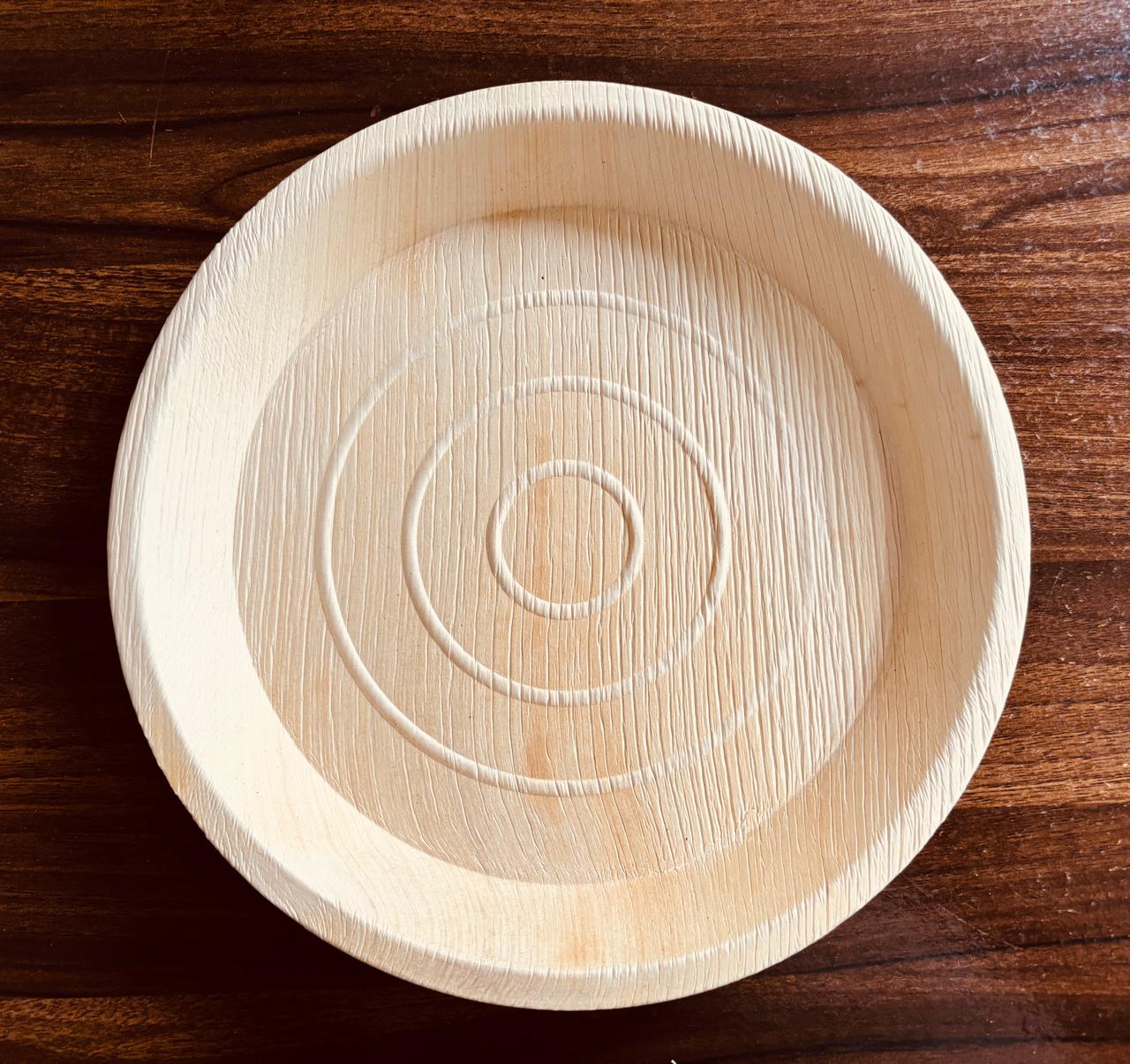
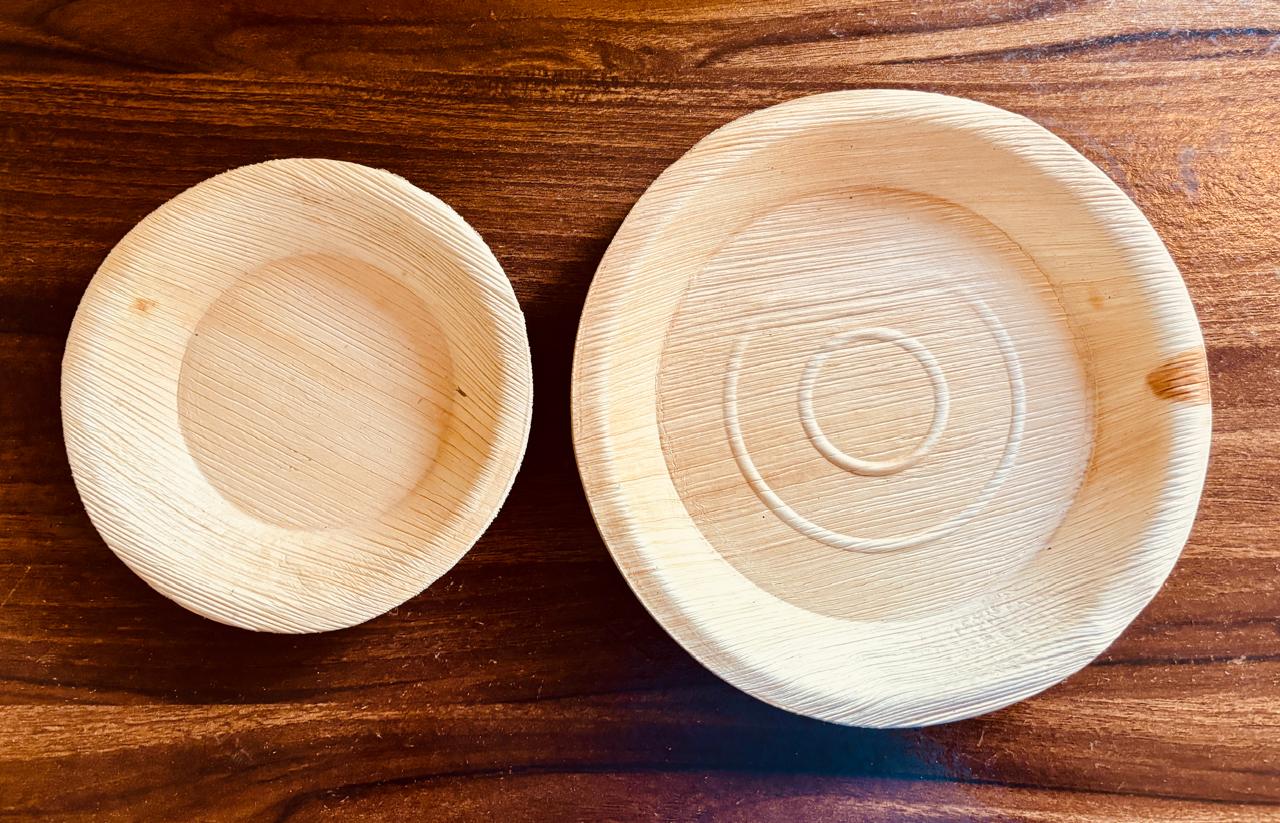
There's something deeply satisfying about holding one of these plates in your hand for the first time. The weight surprises you — it's sturdy, solid, nothing like the flimsy "eco-friendly" disposables you've probably seen before. Run your fingers across the surface and you'll feel the natural grain of the palm leaf, each line telling the story of the tree it fell from. No two plates look exactly the same. That's not a defect — that's nature's signature.
This is Areca Palm Leaf Tableware — and it's one of the most honest products we've come across in our export journey at Dilip Global Supply Chain.
How We Discovered This Product
When we first started looking into eco-friendly packaging and tableware for our export portfolio, we came across dozens of options — sugarcane bagasse plates, bamboo cutlery, cornstarch containers. Most of them needed heavy processing, chemical binding agents, or industrial coatings to hold their shape.
Then someone introduced us to a small manufacturing unit in Karnataka, deep in the areca palm growing belt of South India. What we saw there changed our perspective entirely. Workers were collecting dried, fallen leaf sheaths from the ground — sheaths that would normally be burned or left to rot. They washed them with plain water, sun-dried them, and pressed them into plates using a simple heated mold. That was it. No chemicals. No coatings. No dyes. Just heat and pressure turning a piece of agricultural waste into something beautiful and useful.
We held the finished plate, poured hot dal onto it, let it sit for 30 minutes. Not a single drop leaked through. We were convinced.
What Makes This Truly Different
Unlike bamboo products (which require cutting living bamboo), or bagasse (which is a byproduct of sugar processing and needs chemical binding), areca palm leaf tableware uses only naturally fallen leaves. The tree isn't harmed. Nothing is harvested. It's agricultural waste turned into premium tableware — genuinely zero-waste from start to finish.
How Areca Palm Leaf Tableware is Actually Made
The process is beautifully simple, and that simplicity is exactly what makes it trustworthy. Here's what happens from forest floor to export container:
Collection of Fallen Sheaths
Areca palm trees (Areca catechu) naturally shed their leaf sheaths every 45–60 days. These dry sheaths fall to the ground and are collected by local workers — mostly women from farming communities. This provides a livelihood to rural households without impacting the tree at all.
Cleaning & Sorting
The collected sheaths are washed with clean water to remove dust and debris. No soap, no bleach, no chemicals at any point. After washing, they are sorted by size and quality — only sheaths without cracks or holes make it to the next stage.
Sun Drying
Washed sheaths are spread out and sun-dried naturally. This brings the moisture content down and makes the leaf flexible enough for pressing. The drying time depends on the weather — typically 4–6 hours in direct sunlight.
Heat Pressing
This is where the magic happens. Each dried sheath is placed into a heated hydraulic mold and pressed under high temperature (around 100–120°C) for about 30–45 seconds. The heat and pressure bond the natural fibers together, creating a rigid, sturdy shape. No glue, no adhesive — just the leaf's own natural cellulose acting as a binder.
Trimming & Quality Check
After pressing, the excess edges are trimmed clean. Each piece is visually inspected for cracks, uneven surfaces, or weak spots. Only pieces that pass quality check are packed for export.
UV Sterilization & Packaging
Final products go through UV sterilization to ensure food safety. They're then packed in sets — shrink-wrapped or boxed — and prepared for export shipment.
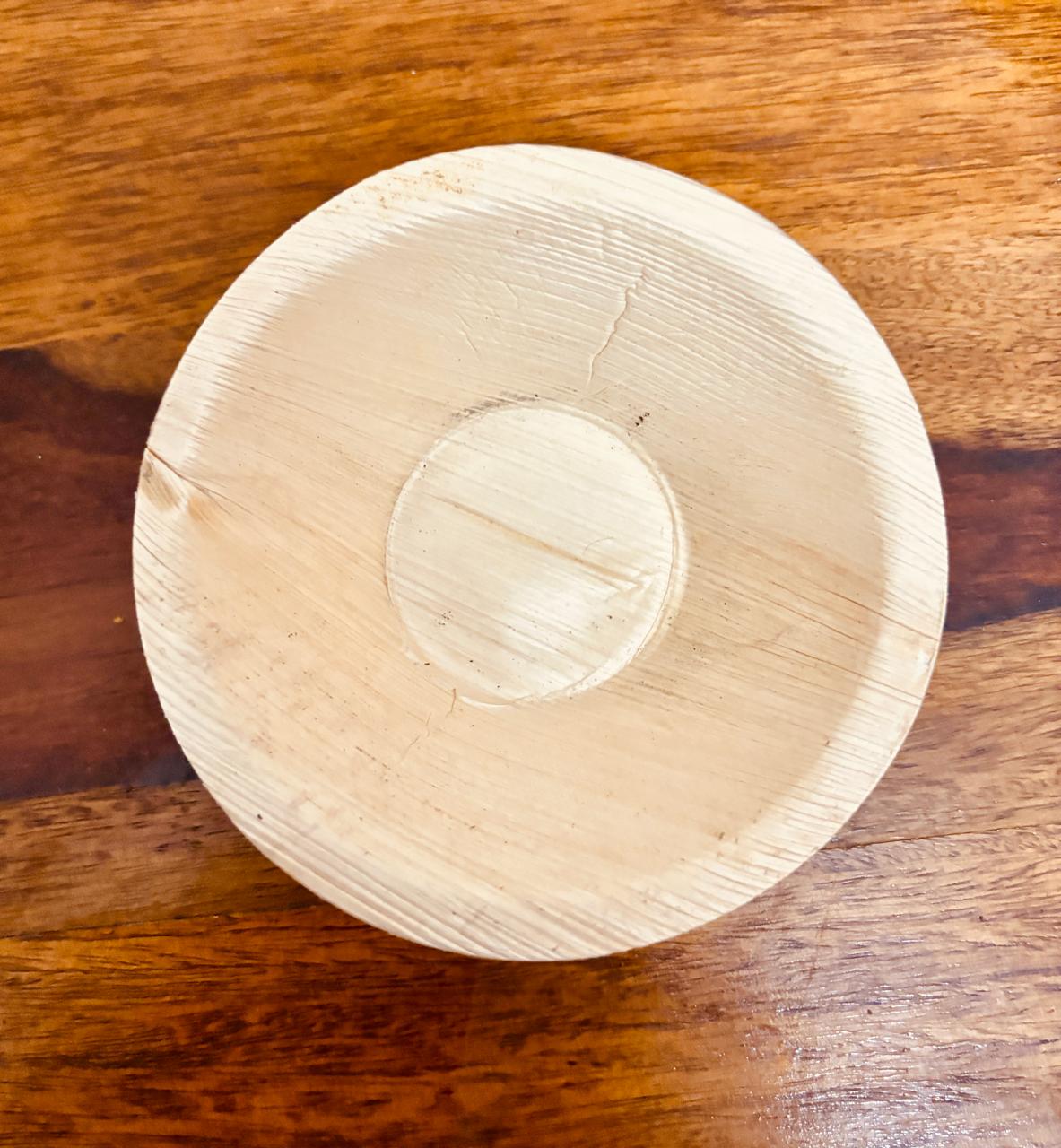
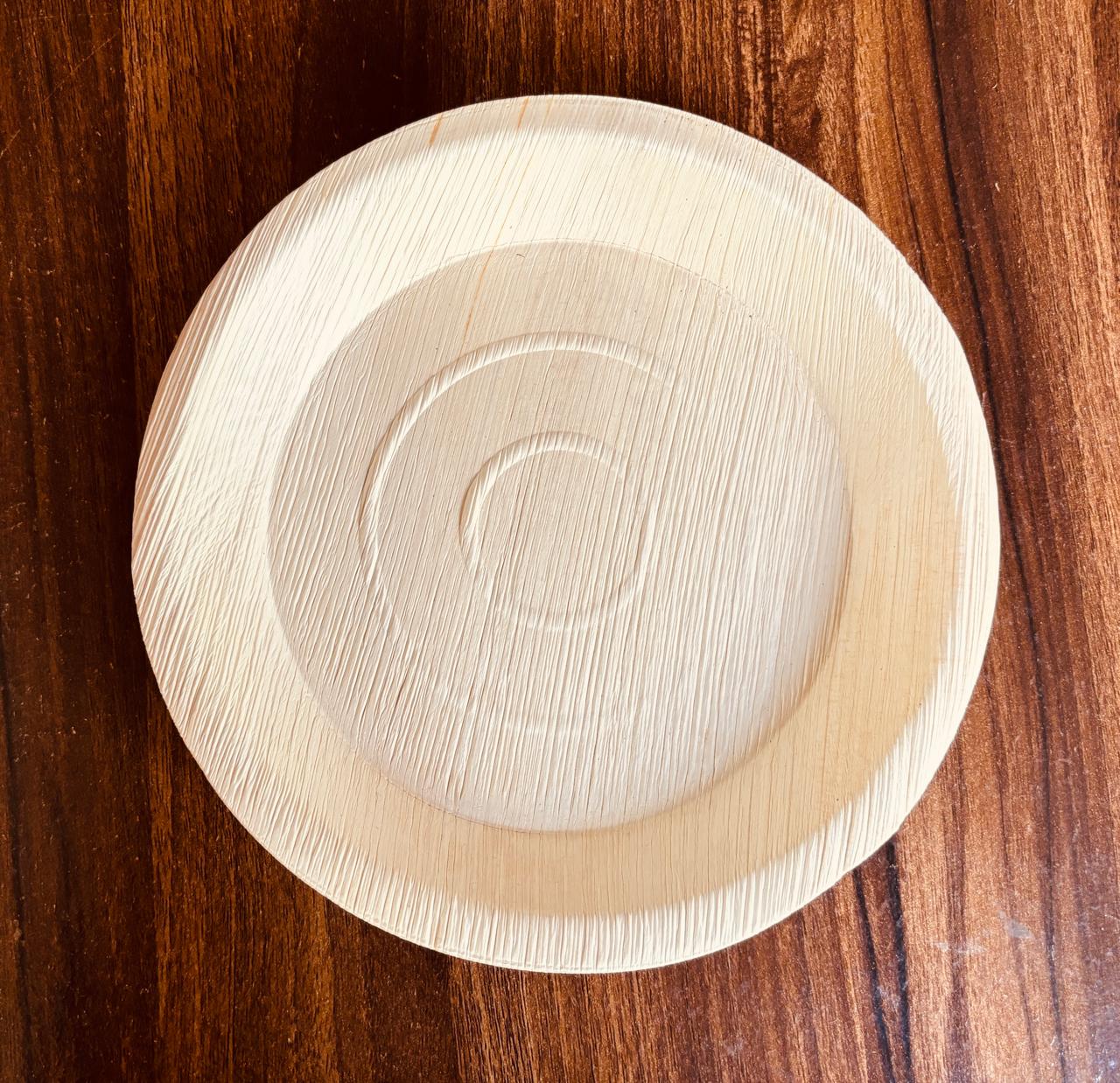
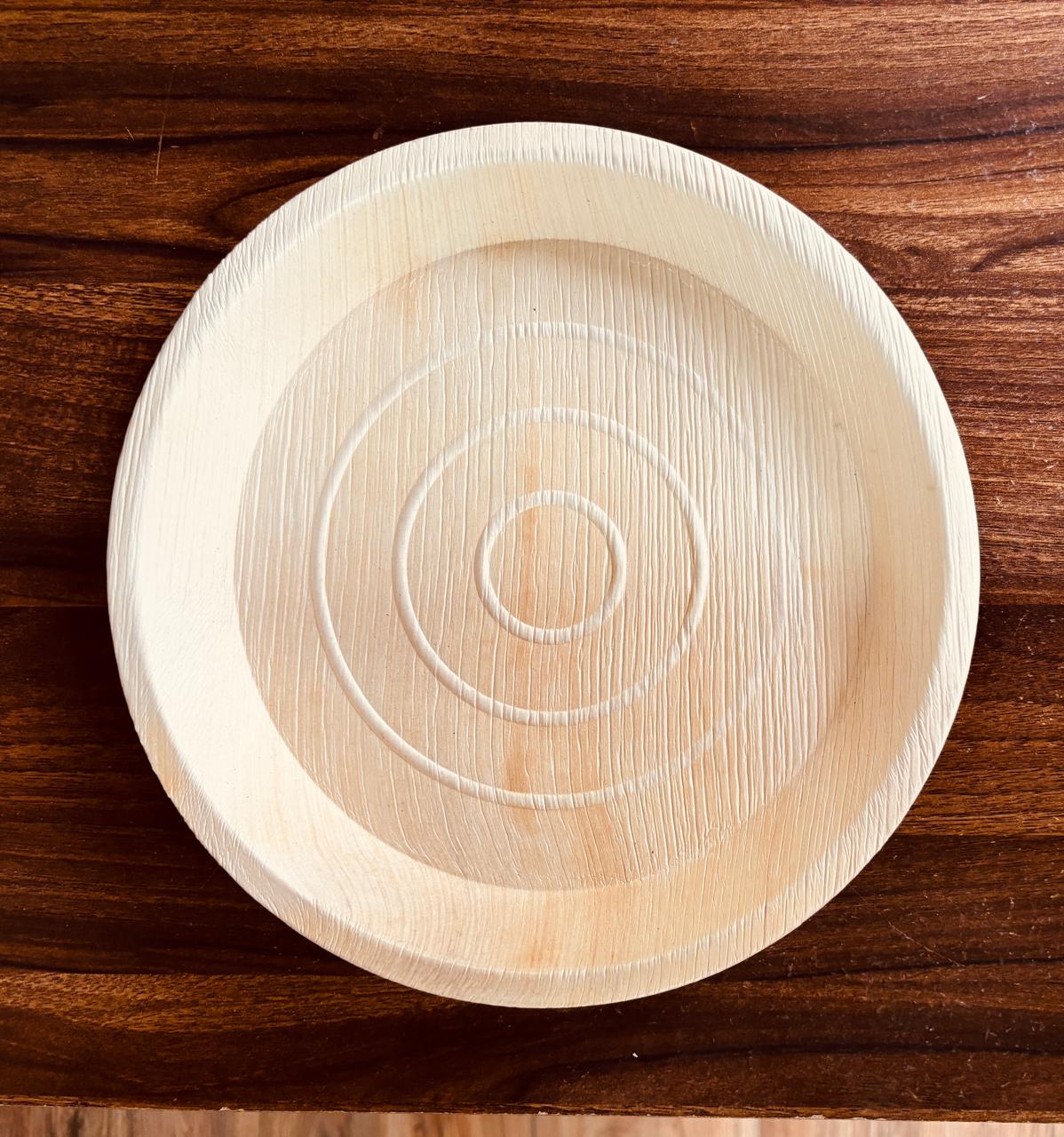
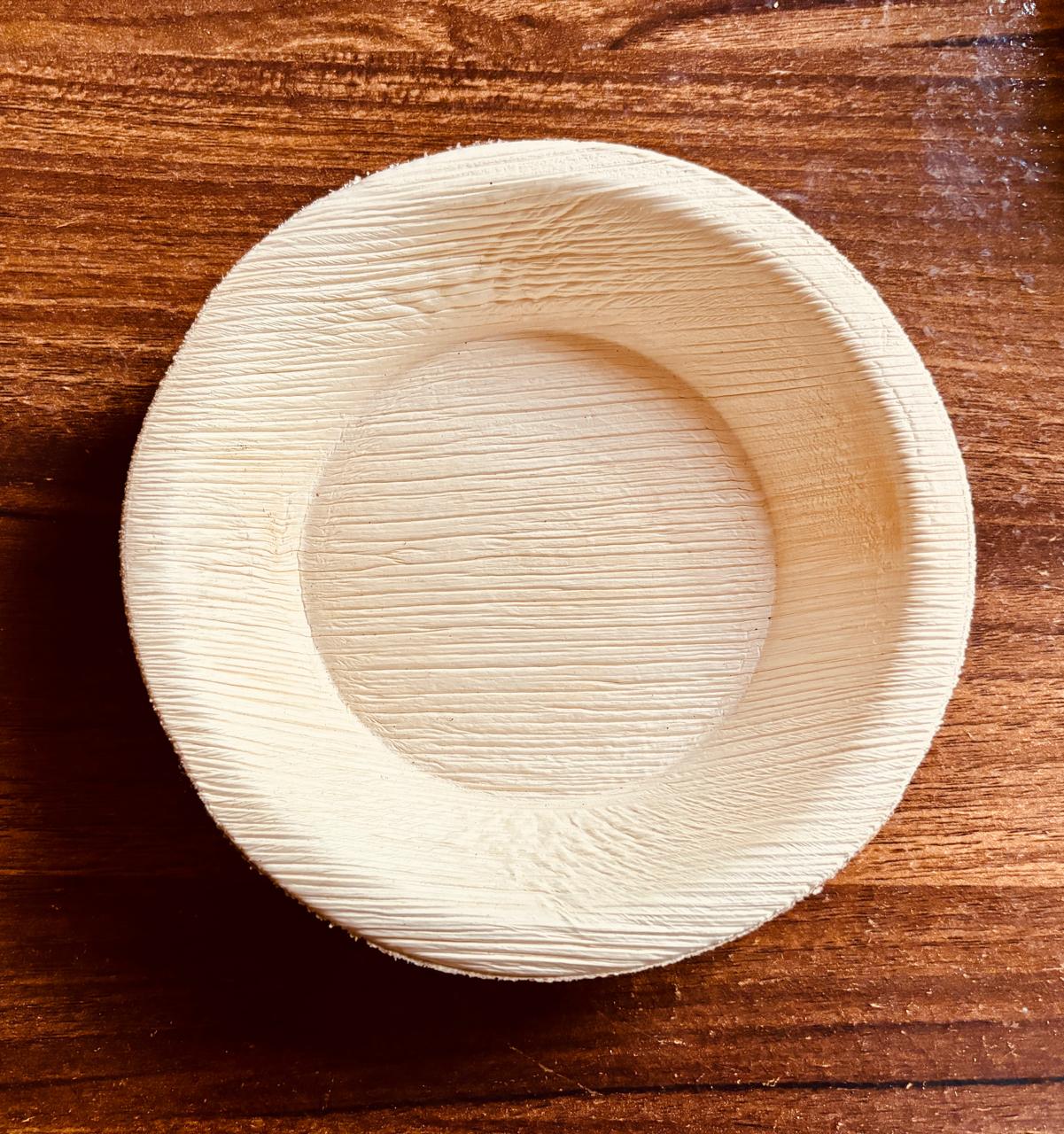
Small bowls, round plates, and deep bowls — each with its own natural grain pattern.
What Can You Actually Serve on These?
This was the first question every buyer has asked us. And honestly, it was our first question too. So we tested it ourselves — rice, dal, sambar, oily curries, hot soup, cold salads, even ice cream. Here's what we found:
- Hot food, oily food, wet food — all handled without any leaking or softening for at least 2–3 hours
- Microwave safe — we reheated food in them at 120°C, no warping, no smell
- Freezer safe — stored in freezer for 24 hours, no cracking
- The plate has a subtle, earthy, woody smell when new — it disappears within minutes of serving food
- Unlike paper or bagasse plates, these don't absorb oil — the natural cellulose acts as a barrier
The one thing they can't handle is prolonged soaking in liquid (like leaving soup in a bowl overnight). But for normal meal service — catering, events, restaurants, takeaway — they outperform every other biodegradable option we've tested.
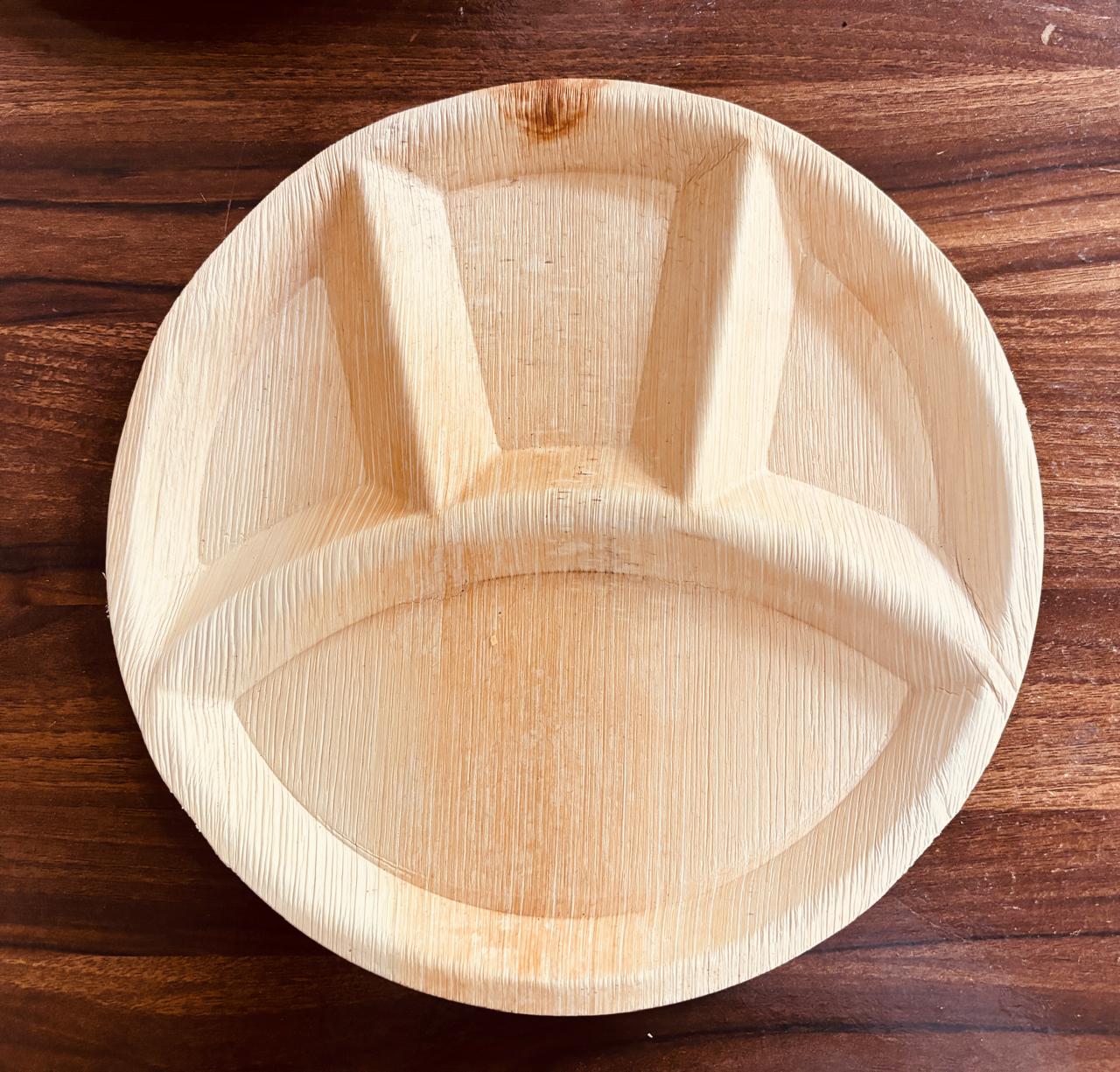
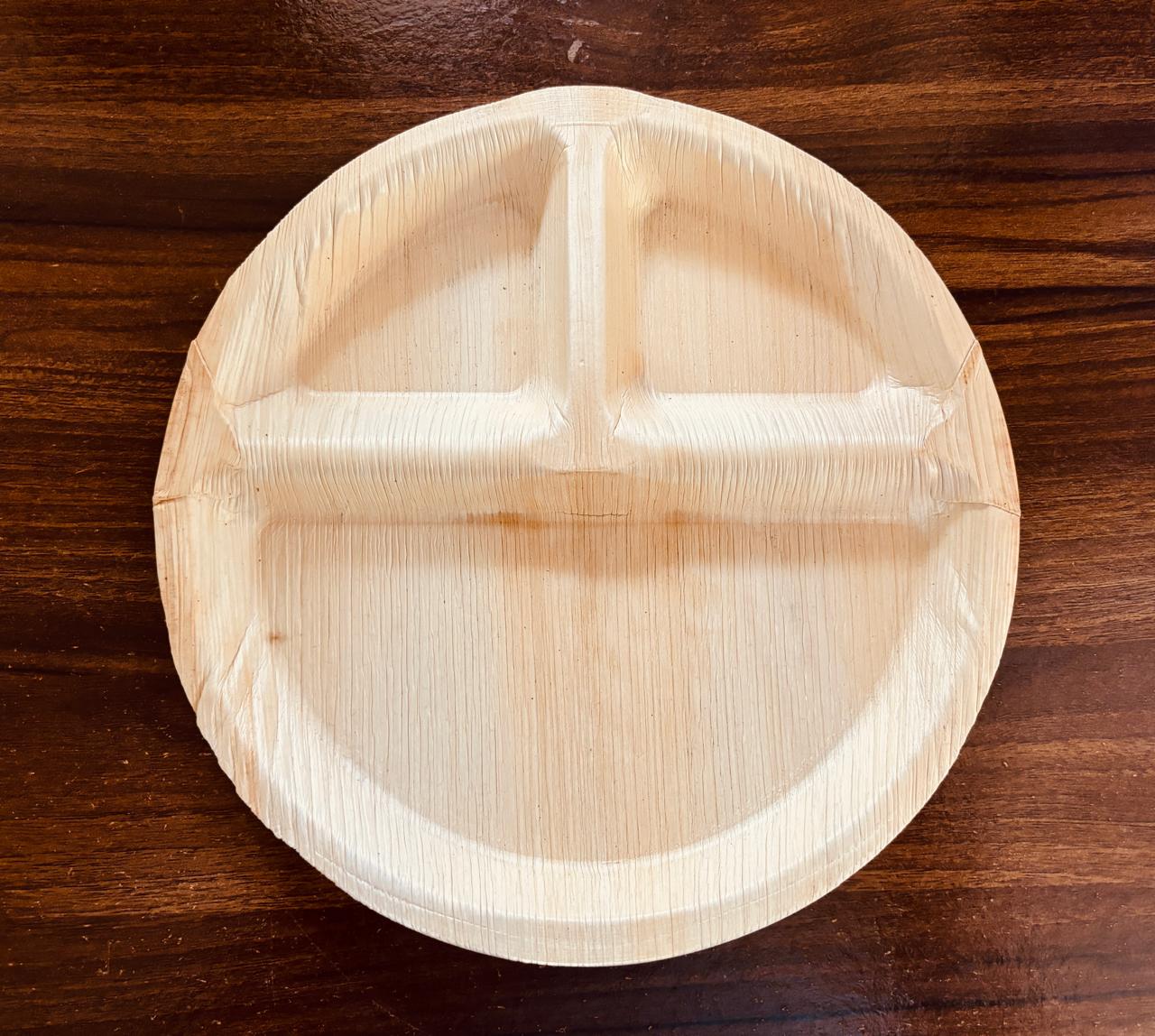
Concentric-ring plates, 4-section divided plates for thali meals, and 3-section plates for catering.
The Full Product Range
| Product | Sizes Available | Best Used For |
|---|---|---|
| Round Plates (Plain) | 5", 6", 7", 8", 10", 12" | Starters, main course, desserts |
| Round Plates (3-Section) | 9", 10", 12" | Thali meals, catering, events |
| Round Plates (4-Section) | 10", 12" | Multi-course catering, airline meals |
| Square Plates | 6", 7", 8", 10" | Premium dining, upscale food service |
| Bowls (Round) | 3", 4", 5", 6" | Soups, curries, desserts, dips |
| Saucers / Side Plates | 4", 5" | Condiments, accompaniments |
| Serving Trays | 10"×7", 12"×8" | Platters, starters, dry snacks |
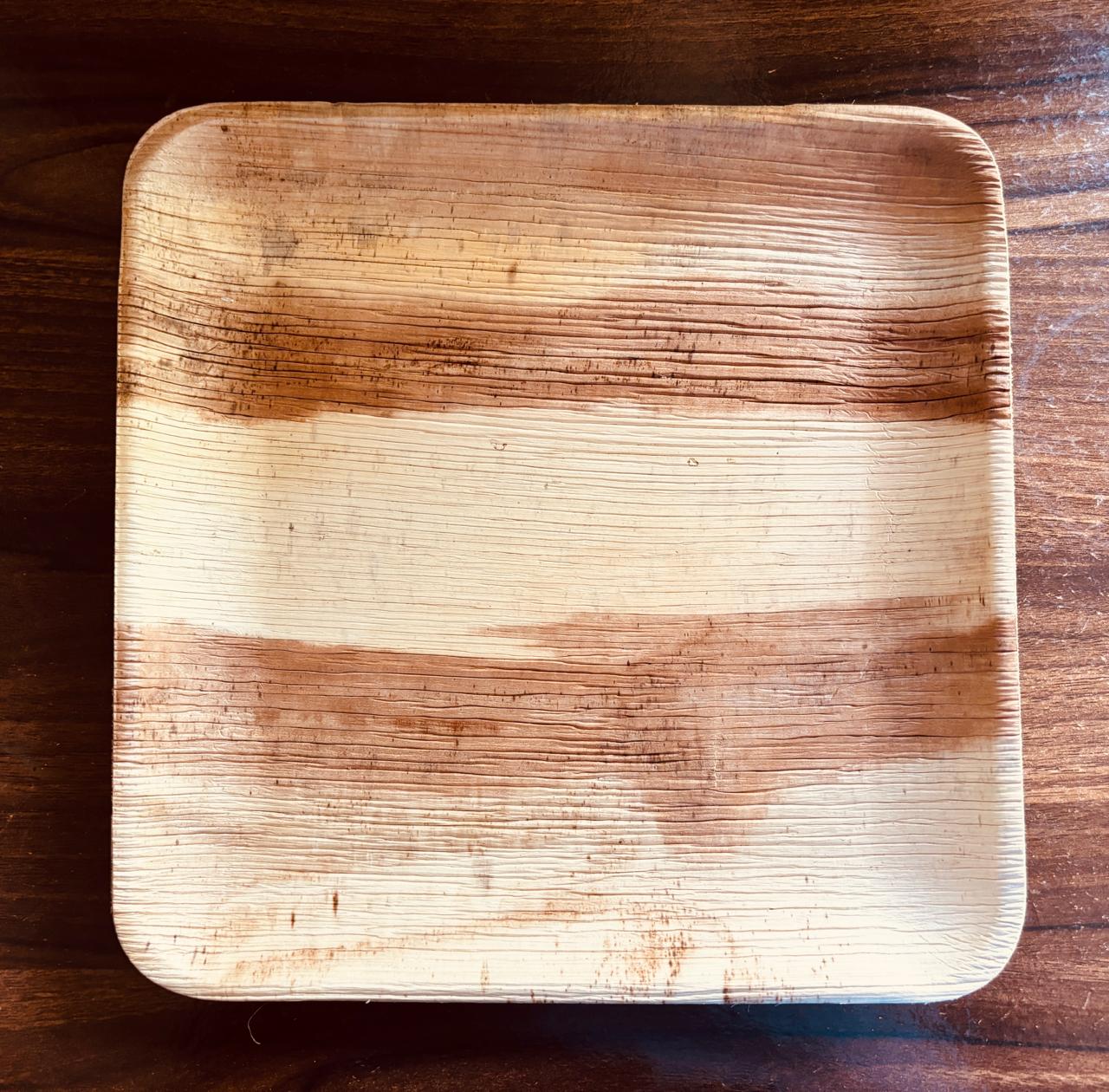
Square plates for premium dining, and a size comparison showing the range from small bowls to large plates.
Why It's Biodegradable — and What That Actually Means
A lot of products carry the "biodegradable" label these days. But what does it actually mean in practice?
We composted an areca palm leaf plate in regular garden soil as a test. Within 45 days, it had started breaking down visibly. By 90 days, it was fully decomposed — indistinguishable from the surrounding soil. No residue, no microplastics, no chemicals left behind.
Compare that to a "biodegradable" PLA (polylactic acid) cup, which needs industrial composting at 60°C+ to break down and can take over a year in regular soil. Or a paper plate with a plastic lining that will still leave microplastic fragments in the soil decades later.
Areca palm leaf products decompose naturally, anywhere — in your backyard compost, in a landfill, even if they end up in a river (though obviously, we'd rather they didn't). The decomposition releases nothing harmful. It's genuinely back-to-earth.
A Note on the Circular Economy
The areca palm tree produces betel nuts as its primary harvest. The leaf sheaths are a natural byproduct — they fall regardless of whether anyone collects them. By turning this waste into tableware, the industry creates livelihoods for rural communities (especially women), adds value to agricultural waste, and produces a product that returns cleanly to the earth after use. That's a genuine circular economy — not a marketing label.
Who's Buying This — and Why
Over the past two years, we've seen demand grow from a very diverse set of buyers:
- European caterers and event companies — driven by the EU Single-Use Plastics Directive. They need certified plastic-free alternatives that actually work with hot, oily food.
- Organic grocery chains in the US and UK — selling retail packs of areca leaf plates alongside bamboo cutlery and beeswax wraps.
- Middle Eastern hospitality companies (UAE, Saudi Arabia) — large-scale catering for events and corporate dining, looking for upscale eco alternatives.
- Eco-conscious restaurant chains — using these for takeaway and delivery instead of plastic or styrofoam containers.
- Wedding and event planners — the natural, rustic look of areca leaf plates has become a design choice, not just an environmental one.
India accounts for over 80% of global areca palm leaf tableware production. South Indian states — Karnataka, Andhra Pradesh, Tamil Nadu, and Kerala — are the primary production hubs. This gives Indian exporters a significant cost advantage and supply reliability that no other country can currently match.
What We Offer as Your Sourcing Partner
At Dilip Global Supply Chain, we don't manufacture these products ourselves — and we think that's actually an advantage. Here's why:
We work with multiple verified manufacturers across the areca palm belt. This means we can match you with the right producer for your specific needs — whether that's a small trial order of 5,000 pieces or a recurring monthly supply of 200,000+ units. If one manufacturer has capacity constraints during peak season, we have alternatives ready.
- Factory-direct pricing with no unnecessary middlemen
- Pre-shipment quality inspection on every batch — we check size accuracy, surface finish, moisture content, and structural strength
- Flexible MOQs — trial orders welcome so you can test quality before committing to volume
- Complete export documentation — Certificate of Origin, Phytosanitary Certificate, Food Safety Compliance, Bill of Lading
- Custom branding and private label packaging — your logo, your product description, retail-ready
- We respond within 24 hours, and you can always reach us on WhatsApp for quick discussions
Export Details at a Glance
HS Code: 4602.1990 | Shelf Life: 18–24 months (dry, cool storage) | Certifications: Food-safe, FSSAI compliant
Packaging: Sets of 25, 50, or 100 per box, with custom retail packaging available. Outer cartons are moisture-resistant corrugated boxes.
Ports: Shipped via JNPT (Mumbai), Mundra, or Tuticorin | Terms: FOB / CIF available
Want to See These Products for Yourself?
Tell us what you need — product types, sizes, quantities, your destination country — and we'll send you a detailed quote within 24 hours. We can also arrange samples so you can hold them in your hands before committing.
Request a Quote →contact@dilipglobalsupplychain.com · WhatsApp: +91-8830534167